The way we think shapes the world we build. To create a regenerative future, we need to rethink how we approach challenges, that is, not just with one mindset, but by blending perspectives. That’s where cognitive diversity comes in. By integrating WEIRD (Western, Educated, Industrialised, Rich, Democratic) and non-WEIRD ways of thinking, we can create solutions that are both innovative and inclusive.
What is WEIRD thinking?
Joseph Henrich’s book The WEIRDest People in the World explores how WEIRD thinking became dominant in shaping modern life. Thanks to events like the Protestant Reformation, literacy expanded, rewiring our brains for analytical thinking. This shift encouraged individualism and a mechanistic worldview, where ideas are broken into parts to be understood.
And ‘WEIRD’ perspectives are seen as the right way to think, to act and to be. Influencing policies, economics, governance, education and so forth. YET Henrich points out this is based on research relying on Western college students as participants. This creates a “confirmation bias” that skews how we understand human behaviour, leaving out perspectives that could offer valuable insights.
How non-WEIRD societies think differently
Non-WEIRD societies focus on relationships, interconnectedness, and oral traditions to pass down knowledge. These approaches prioritise community and holistic thinking over individualism. Heinrich cites research of the brain that shows that oral cultures have pathways that prioritise holistic, placebased, ecological and systems thinking.
In their article, “Sydney as an Indigenous Place: ‘Goanna Walking’ Brings People Together”, Jo Rey and Neil Harrison highlight how the Dharug people of Sydney embody these principles. For the Dharug, “Country” isn’t just land. It’s a living, spiritual connection that combines physical, cultural, and metaphysical elements.
I got really excited about this article and the work of Heinrich because it gives a brain plasticity opportunity to bring together both oral and literate thinking. So that it isn’t just one or the other… but BOTH!
What is “Goanna Walking”?
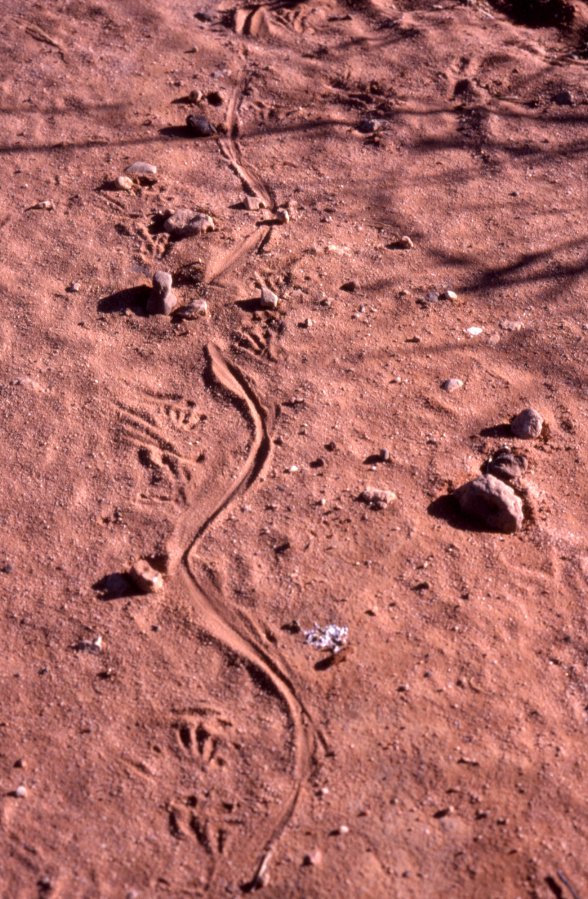
A goanna leaves linear paw prints, with a sinuous tail weaving between as it moves (right and left pads leave tracks in a straight line). This could be a metaphor for right brain, left brain, or oral and literate, while the tail sinuously weaves between them both. This is a potentially non-linear working together of the two ways of thinking.
In practice, this can give us a visual blend of different perspectives. It creates relational spaces where Indigenous and non-Indigenous people can meet, share stories, and learn from each other. Storytelling and shared vulnerability lie at its heart, fostering mutual understanding and deeper connections.
Why both perspectives matter
WEIRD thinking has driven technological progress, non-WEIRD perspectives offer a way to connect with what’s been lost: relational and holistic approaches. Woven together, for example. Rey and Harrison’s “Country Tracking Voices” project uses Indigenous storytelling to foster understanding and preserve cultural knowledge. Their knowledge of the seasons gives us a greater understanding of the signs of a place and how to design and relate to that place.
The ‘goanna walking’ of this could be how to work with ecological challenges, with understanding land management, and how to better plan and minimise risk of place based decision-making. This is just one way of how blending worldviews could lead to innovative ideas and stronger communities.
How to act on these ideas
To create a regenerative future, we need actionable steps. Here’s where to start:
Short-term steps
- Invite non-WEIRD voices into leadership, education, and policymaking.
- Create spaces for relational learning, like Rey and Harrison’s “Goanna Walking” projects.
Long-term goals
- Blend oral traditions with written knowledge in education to encourage holistic thinking.
- Support intercultural projects that celebrate both analytical and relational perspectives, like art collaborations on Country.
Henrich, Rey, and Harrison all point to the same truth: diverse ways of thinking are essential for solving the challenges of today. By combining the strengths of WEIRD and non-WEIRD perspectives, we can create a future that’s more inclusive, sustainable, and connected.
The next step? Start integrating these ideas into our lives, work, and policies.
Because the world we build tomorrow depends on the perspectives we embrace today.


 Newport Lakes Stories and Contributive Practice
Leave a comment