I’m grateful every day for the land on which I live and work, and for all that it provides. Its resources and wisdom, if we are willing to observe and listen.
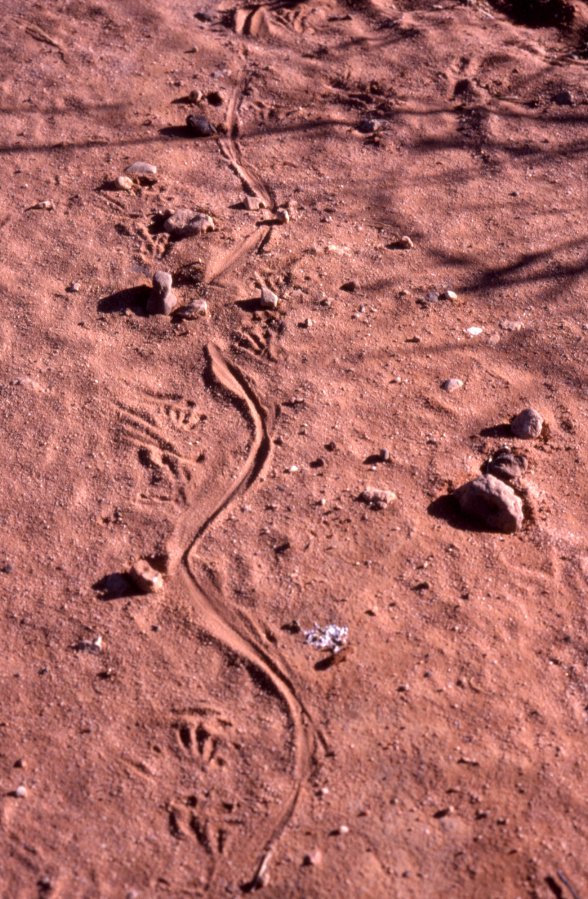
There’s a beautiful metaphor I return to often. It comes from a 2018 article by Jo Rey and Neil Harrison, in which they describe their approach to research as “goanna walking.” They write:
“Like the goanna, we use our eyes and ears to observe and listen to all that we meet; our tongues allow us to test, ‘read’ and translate what we learn; and while we use our steps on the left and our steps on the right to progress, it is the trails in the sand, at the centre, from our tails (tales), that mark our continuity.” (source)
There’s something about this idea of goanna walking that stays with me. It’s a way of moving through the world with attention, care, and a willingness to learn. And that feels especially important right now—when we’re often pulled between sides, or caught in the noise. This kind of walking reminds me that meaning doesn’t come from rushing ahead. It comes from how we move, how we listen, and the stories we carry and leave behind.
The stories we tell ourselves
In Chapter 1 of Designing for Hope, we explored the stories that shape how we live, and how they’ve led us to where we are. These stories aren’t always obvious, but they’re powerful: they shape what we believe is possible, acceptable, or even real.
Many of them are flawed: they are stories of progress built solely through technology, or stories of development as something linear and measurable. There are also stories that assume the world is something to be managed, instead of related to.
I remember being inspired by David Korten’s work, Change the Story, Change the Future. He described the dominant narratives we live by—the grand machine, the distant patriarchy, sacred money—and asked: what would happen if we lived by different ones? Stories centred around sacred life and living Earth?
That question continues to shape my work.
What an ecological worldview really means
In Chapter 2, we explored what happens when we embrace a different way of seeing: the ecological worldview.
To me, this means that while ecosystems are built on physical systems like soil, nutrients, water, we recognise that the societies we create are built on stories, and the meanings we make together. Any regenerative future must tend to both.
This insight is what drew me to placemaking: not just restoring land, but creating the capacity for people to feel connected to place. To have a role in it. To feel a sense of agency and responsibility.
New stories for everyday practice
When we adopt this worldview, the stories we tell in our work begin to shift.
Take regenerative agriculture, for example. It’s not just about rebuilding soil or increasing crop yield. It’s also about community vibrancy: how families support each other, how people gather, resolve conflict, celebrate, and share knowledge. The social flows matter as much as the physical ones.
We move from asking, “Is the land healthier?” to “Is the whole system—land, people, relationships—thriving?”
The values that ground us
We offered 10 values in Designing for Hope to help guide work within complex systems. Ten years on, I wouldn’t change them, but I might bring a few forward:
- Integrity
- Inclusivity
- Harmony
- Respect
- Mutuality
- Positive reciprocity
- Fellowship
- Responsibility
- Humility
- Non-attachment
These values remain deeply relevant. But perhaps now I would hold them more simply, more lightly. At the core is one question I come back to:
Is what I am doing in service of place—of its people, its systems, and myself?
So what has changed in ten years?
What’s changed is that we’re on our way to a deeper understanding of place and agency; of helping people reconnect to where they are, and to understand their role within that place. Giving them the rights, the skills, and the support to co-create a thriving future.
Because when we walk together—observing, listening, storying as we go—we leave trails that don’t just show where we’ve been. They help shape where we’re going.
Maybe we are starting to learn to Goanna Walk!
What stories are shaping your work today? And what might shift if you saw them differently?


 Newport Lakes Stories and Contributive Practice
Leave a comment