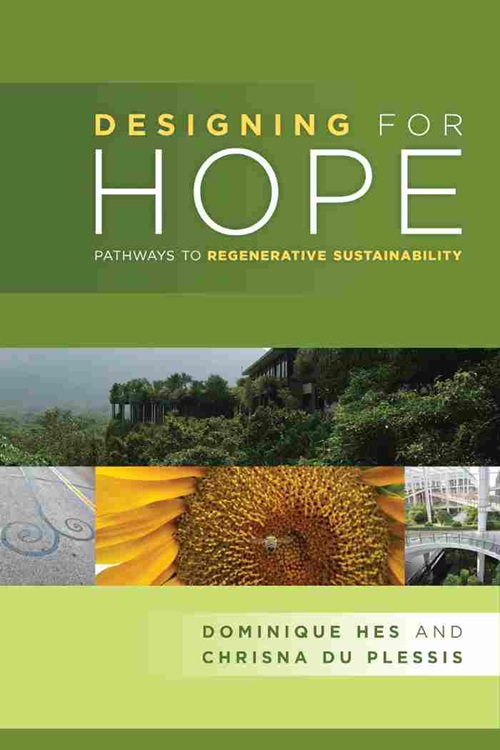
When I first co-authored Designing for Hope with Chrisna du Plessis in 2015, we wanted to challenge the mainstream sustainability discourse. Too often, sustainability was framed around minimising harm, i.e. doing “less bad.” But we believed we needed to move beyond that mindset: what if design could actively give back to the environment and communities rather than just reducing damage?
As I look back on these past 10 years, I see how this book has sparked discussions, influenced projects, and shaped a new way of thinking about regenerative design. So many people have said “I read your book and it really gave me a glimpse into what is possible.”
Today as we grapple with climate/political/economic anxiety, we want this book to remain a hopeful, solutions-driven guide for creating a thriving future.
This book is a Regenerative Development 101 type book, it outlines the values, the potential and the different methods that can be used to inform projects aimed at contributing to the place’s viability, vitality and flourishing.
Why Designing for Hope still matters in 2025
So much has changed in the past decade, yet the fundamental ideas in Designing for Hope remain deeply relevant:
- Sustainability isn’t enough. We must transition from “doing less harm” to actively regenerating ecosystems and communities ie ‘doing good”.
- Regenerative design can create a positive impact. The book explores transformative approaches like biophilic design, permaculture, and positive development to build a flourishing world.
- Hope is essential for change. The book was born from a desire to counter the overwhelming negativity surrounding climate change and sustainability efforts.
Today, with the rise of regenerative sustainability and design, net-positive design, and circular economies, I see how these ideas continue to gain momentum.
This gives me hope.
ANNOUNCEMENT 1
Now is the time to ramp up these stories, our efforts to create a regenerative, flourishing future.
For this reason Chrisna and I have gotten the rights back from the publishers and now offer a low-res pdf version for FREE or a hard copy, at as cheap a price as we could get it.
- FREE LOW RESOLUTION PDF full book see at the end of the article (low resolution to support people with low data to download.)
- Buy physical copy online here should be around $50-$60AUD
- Email to get hard copy from the Author Designinghope10@gmail.com at cost plus postage
- Ask your local book shop
What Designing for Hope has taught me
Writing this book was as much a personal journey as a professional one. Over the years, we’ve learned that:
Mindset matters
Sustainability often focuses on limitations, but regenerative design is about abundance. Instead of asking how we can reduce harm, we should be asking: how can we leave things better than we found them?
Nature has the answers
Drawing from biomimicry, permaculture, and regenerative development, we’ve seen how designing in harmony with nature creates lasting solutions, innovation and healing.
Real change happens through action
The book includes insights from over 50 experts and 30 real-world case studies, proving that regenerative principles can be applied in architecture, urban planning, land development and business. Seeing these ideas in action has been incredibly rewarding.
Looking ahead: the next chapter of regenerative design
As I reflect on the past decade, I’m reminded that hope is a choice. We can choose to engage with sustainability from a place of fear and limitation, or we can embrace a future of thriving, regenerative systems.
If you are a designer, architect, urban planner, engineer or sustainability consultant, I invite you to explore this book. Let’s continue pushing the conversation forward because the future isn’t just something we inherit, it’s something we design, we need to actively participate in.
ANNOUNCEMENT 2
A lot has happened in the last 10 years so look out for Chrisna and I sharing conversations on YouTube on: ’10 years on’ chapter by chapter.
Link to YouTube – first session mid March grab your copy of the book and join us for the ride!


 Newport Lakes Stories and Contributive Practice